
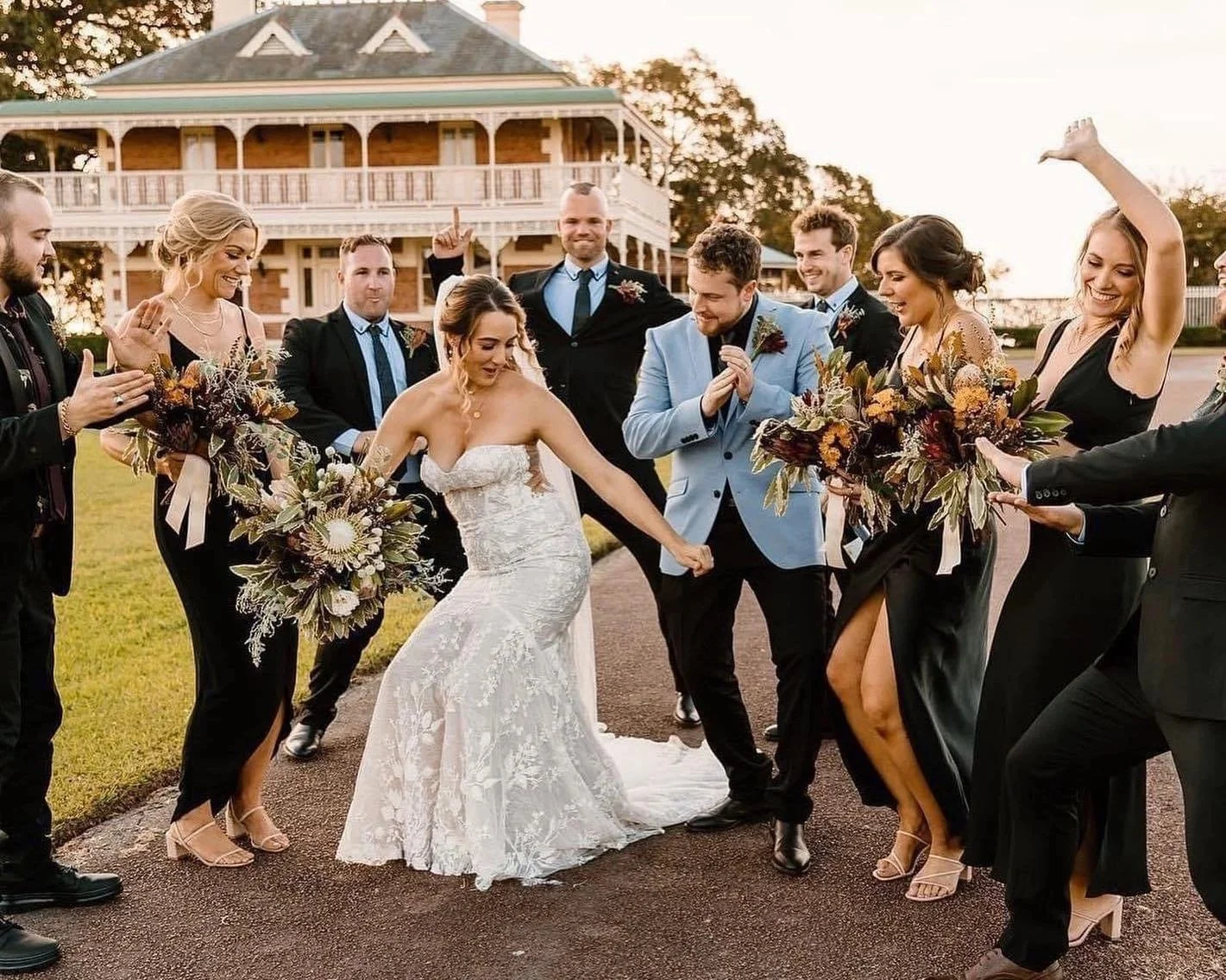
Photo by Bare And Wild Photography
If you're planning a wedding in Sydney (or anywhere, really), you've probably noticed that the ceremony ends up split across a dozen different to-do lists. One list has the celebrant, the legal paperwork and the vows. Another has the song selections, the timings, who is singing them for those exact wedding moments. The challenge is, on the day, those two lists have to happen at exactly the same time, in the same few square metres, in front of everyone you love.
This is the part we love most about what we do. Angela looks after your ceremony and your legal marriage, and Chris will look after the music and sound, so the cues, the songs and the words are planned together rather than stitched up in the final week. Here's the timeline we use, so you can borrow it whether you're working with us or simply want a clearer plan of your own.
Why these two things belong in one plan
A ceremony is a sequence of moments with sound attached to each one. Your guests arrive to something. You walk in to something. You sign to something. You walk out to something. Your celebrant is the person calling every one of those transitions.
When the celebrant and the musicians are working from the same run sheet, three good things happen:
Nothing is left silent. There's no awkward gap while someone finds a track, and no song starting over the top of a welcome speech.
The pace is right. Songs get faded rather than cut, with just the right phrasing to match the pace of your entrance, and the signing music can be either transitioned to a second song, or simply extended as needed to avoid minutes of dead air.
You don't need a coordinator for the ceremony. Angela and the team already know who is doing what and when, so your family and friends can just be guests.
Your step-by-step timeline
12 months out: Book both, and book them together
Ceremony suppliers book out early in Sydney, particularly for spring and autumn Saturdays. If you can talk to your celebrant and your musicians in the same conversation, do it. You'll want to know:
Is your celebrant a registered marriage celebrant, and are they available for your date?
Can the same team handle ceremony music, sound and the reception, so you're not juggling suppliers?
Who will be providing PA and lighting for your ceremony, cocktail hour and reception?
What are your estimated guest numbers? Knowing this in advance allows your musicians to plan the appropriate sound delivery so everyone can experience your wedding in the best way possible.
4 months out: Choose the moment-by-moment soundtrack
For your wedding moments, don't just pick your favourite song of the week - choose music that speaks to you as a couple and helps to remind you of your story together.
Guest arrival (15–30 minutes) — relaxed, warm background music that sets the tone without stealing attention.
The aisle walk — usually one piece, sometimes a second if you have a bridal party entering separately.
Signing of the marriage certificates — either a choice of two songs, or a longer piece, because this is where the practical moments happen.
The recessional — something upbeat and celebratory, because you're walking out married.
3 months out: Start planning the ceremony with your celebrant
This is where lyrics and words collide. Two things to sort out now, with the aim to complete it the month BEFORE your wedding date:
Your Legal Stuff. Make sure that all your forms and details are correct, and up to date and submitted with your celebrant. The earlier the better, as some forms are VERY time specific and if you submit late, this may mean your legal wedding day needs to be moved. It's better to be early than late!
Your Vows. Will you be writing your own vows or keeping it simple? Your celebrant will be your guide here - the more personlised you want your ceremony to be, the more time you may need to spend with your celebrant to plan this.
Any songs inside the ceremony. A live acoustic moment during the ceremony can be beautiful, but it needs to be written into the ceremony script with a clear cue, not squeezed in afterwards.
6 weeks out: Walk the venue and check the practical stuff
Visit the ceremony space with your celebrant and musicians in mind. Where will you both stand? Where will the microphone be? Is the ceremony outdoors, where wind and traffic noise will affect the sound? Is there a Plan B location?
Ask about:
Power access and whether your music supplier brings their own PA and backup.
Any venue sound restrictions or curfews. Be sure to share this information to your musician/DJ
Lighting, if your ceremony runs into the late afternoon or evening.
A wet-weather plan you've actually confirmed, not just assumed.
2 weeks out: Lock the run sheet
Write one document and send it to everyone. Our run sheets always include:
The runsheet with timings, from guest arrival to the recession.
The songs to be played for each wedding moment as previously arranged
Any other ceremony special moments: such as a moment of silence, a cultural ritual, a surprise.
The full contact list, including the venue.
The week of the wedding: final details then stop fiddling
This is the week where you may discover small tweaks need to be made. That's normal. If needed, adjust once, confirm the final version with everyone, and then relax and focus on your preparation.
The day: arrive to music already playing
Your music should be running before your guests are. That single detail makes a ceremony feel intentional. From there, your celebrant and musicians run the cues and you simply get married.
The ceremony run sheet moments to plan for
MomentWhat it needsGuest arrivalBackground music, gentle volumeCelebrant's openingMicrophone set, music out cleanlyProcessionalClear cue, fade option, second entrantWelcome and housekeepingQuieter music underneath or noneReadingsDecided in advance: instrumental or a cappellaVows and ringsNo music competing with the wordsSigningMusic as planned, long enough for certificates to be signed and couple and celebrant to take their final placesRecessionalUpbeat, starting on a clear cueAfter the ceremonyMusic into the drinks hour
Quick decisions that save you stress
Don't feel obliged to use traditional songs. Your ceremony music should sound like you, not a wedding cliché. If you love a song, we'll arrange an acoustic version of it.
Keep your ceremony microphones simple. We keep the setup simple, but reliable by using some of the best equipment in the industry. One for the celebrant and one for the reader is almost always enough outdoors, using digital systems over wireless UHF, ensuring the best audio and no cutouts during your vows and speeches.
Tell your photographer the key songs. Be sure to share the runsheet with your photographer & videographer so they know the run of the day and be ready for those first looks and other special moments and reactions.
Think about the gap between the ceremony and reception. Good music covers the introductions and the drinks hour without anything feeling stalled. Whether you're using the same musicians for both parts, or if there is a transition from one to another, note this in the runsheet.
Where the rest of the day fits in
Most couples find that once the ceremony is mapped out, the reception plan gets easier too. The same team can move into cocktail hour, introductions, dinner sets and the dance floor — which means no handover, no second sound check and no explaining your style to someone who wasn't there.
If you'd like help, you can see how our customised wedding packages can bring ceremony, cocktail hour, reception and dancefloor together in a single package, take a look at our Weddings Page or reach out via the Wedding Enquiry Form today!
Your checklist:
Book your celebrant and musicians together, and confirm the date.
Choose songs for arrival, aisle walk, signing and recessional.
Confirm PA, power, microphones and a backup.
Check the venue's sound rules and wet-weather plan.
Write one run sheet with cues, names and contacts.
Rehearse, finalise, and then enjoy it.
If you'd like to start with a conversation — no pressure, no sales pitch — tell us your date and venue and we'll tell you honestly what your ceremony needs and how we'd plan it with you.
